Sourcing Guides
China vs Vietnam vs India: Where to Source Floating Shelves
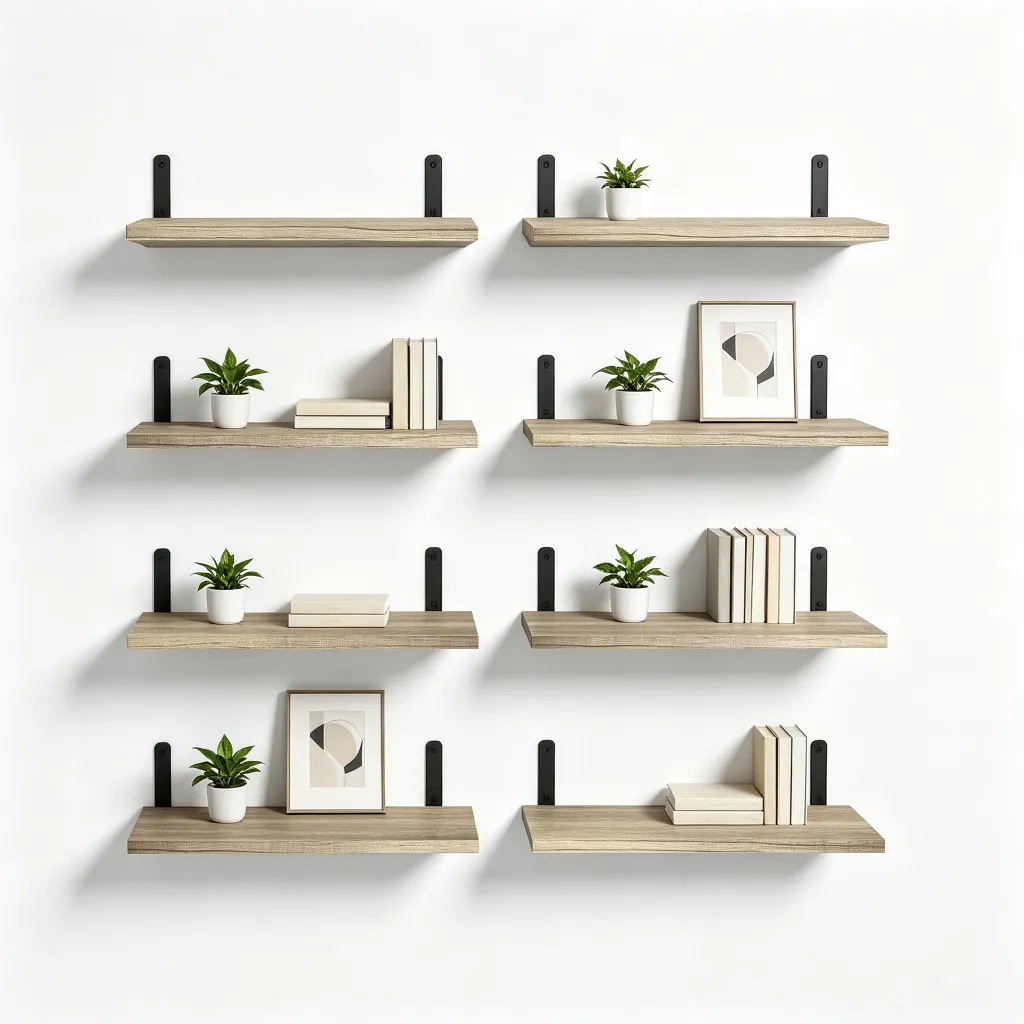
We get this question in RFQs at least once a week, usually in a single line: “We are comparing China, Vietnam and India — why should we buy from you?” It is a fair question, and the honest answer is that there is no single best country for floating shelves. There is a best country for your order: your sizes, your species, your quantity, your delivery date, and the paperwork your market demands. This guide compares the three on those terms, with numbers we can stand behind, and says plainly where each one wins.
One note on how to read it. We manufacture in China, in Xianju, Zhejiang, so we know our own costs, lead times and timber best. For Vietnam and India we use published trade figures and what exporters there publish about themselves, and we say so where we do. If a supplier in any of the three countries cannot answer the five questions at the end in plain numbers, the country comparison stops mattering.
Start with the shelf, not the flag
A floating shelf is a board, a bracket and a finish — and the country that makes it well is the one where those three meet your spec without a fight. Species decides weight, freight and finish. Order size decides whether the factory line runs efficiently or keeps stopping for changeovers. The destination decides the documents. None of that is decided by a flag. It is decided by what is actually in the yard, on the line and in the packing room.
So this comparison is organised by decision, not by country. Six decisions, then a short verdict for each kind of buyer.
China: the full shelf supply chain in one place
Our factory has made floating shelves in Xianju since 2010 — 15+ years of export, 100+ people on site, and a supply chain that sits within a day’s drive: paulownia and pine boards, steel bracket workshops, finishing lines and carton suppliers. That density is the practical advantage. When a buyer changes a size or a finish mid-order, we are not waiting on a shipment from another province to retool. We are walking to the next building. That density is not unique to Xianju — it is how this industry clusters, as our tour of China’s wall shelf manufacturing hubs shows.
The numbers we quote from: 500 pcs per SKU per color minimum order, 2–4 weeks for standard production and 4–8 weeks for custom work, counted from deposit and approved sample. Mixed sizes and finishes in one order are how most of our buyers reach a workable total — the MOQ is per SKU per colour, not per container. See our MOQ guide for how the math works, and the floating shelf catalog for the standard range it applies to.
Paulownia is the species that shows why the supply chain matters. Our paulownia wood page lists it as a light, stable board; in practice it is what keeps a shelf set shippable. Take our paulownia set of 8 — 16.5 in wide, 5.8 in deep, 0.6 in thick, natural carbonized finish, black metal brackets. Eight shelves in one retail carton, light enough that the freight per unit stays sane. That is a supply-chain decision as much as a design decision.
Where China is weaker, we will say it. For a very large run of one identical plain unit, a Vietnamese volume line can quote lower; for a single handcrafted statement piece, an Indian workshop wins on character. China wins the middle: mixed ranges, repeat orders, tight tolerances, FBA-ready packing.
Vietnam: volume, and the US lane
Vietnam is the scale story. Vietnam Customs put 2025 wood and wood-product exports at $17.2 billion, with wooden furniture at about $10.25 billion — and the US took $9.46 billion, roughly 55% of the total. US trade data for the first eight months of 2025 showed Vietnam holding about 45% of US wooden-furniture imports, making it the largest supplier to that market. Those are real numbers, and any buyer sourcing for the US should know them.
What they mean for a shelf buyer is narrower than the headline. Vietnamese factories are built for volume — indoor furniture sets, shipped in quantity to US retailers. Floating shelves are a small line inside that machine. Before choosing Vietnam for shelves, ask the factory three things: does it run small mixed shelf orders or only long single-SKU runs, what is its MOQ per SKU rather than per container, and has it packed oversize wood for FBA before? Our FBA packaging checklist shows what that packing has to survive. If your order is 5,000 identical units of one size, Vietnam deserves a quote. If it is 500 pieces across four sizes and two finishes, the changeover answer matters more than the country.
One watch item: trade press through 2025 reported reciprocal-tariff pressure and new US Section 232 duties touching some wood products. We do not quote duty rates — they move by HTS code and by month — so read any Vietnam quote with your broker’s current duty figure beside it.
India: solid wood craft, and a different order shape
India’s strength is character. The Jodhpur cluster in Rajasthan is the name every buyer hears first: solid sheesham, mango and teak, hand-finished, often with metal or bone inlay. The Export Promotion Council for Handicrafts puts India’s handcrafted furniture exports above $2 billion a year, and Jodhpur is repeatedly credited with around 30% of the country’s furniture exports. That craft is real, and for the right SKU it photographs better than anything a production line makes.
The order shape is different. Indian exporters publish longer lead times — one established exporter quotes 30–45 days — and trial orders often run as LCL before a full container. Hand-finishing means grain and tone vary piece to piece; that is the selling point on a hero SKU and a problem on a 200-room hotel reorder unless a retained sample governs every batch. Ask how the factory holds finish across batches, and what happens when a replacement has to match a shelf bought two years ago.
So India wins the statement piece: the boutique shelf, the hotel feature wall, the solid-wood hero in a premium range. It is a harder fit for tight-tolerance repeat runs of identical painted sets, where variation reads as a defect rather than a feature.
Side by side: six decisions
Species and material supply
China: paulownia and pine are our everyday stock, with finish colours — walnut, oak, white, black — applied over the board rather than cut from those species. Vietnam: plantation rubberwood and acacia are the volume species, with strong panel and set-furniture supply. India: solid sheesham, mango and teak, where the grain itself is the product. Match the species to the price tier before you match it to a country.
MOQ and order shape
Our floor is 500 pcs per SKU per color, with mixed sizes and finishes in one order. Vietnamese volume lines are typically built around larger single-SKU runs — ask for the per-SKU figure, not the per-container one. Indian exporters commonly open with a trial LCL shipment and move to full containers on repeat. The question is never “what is your MOQ” alone; it is “what is your MOQ for my exact mix”.
Lead time
Ours: 2–4 weeks standard, 4–8 weeks custom, from deposit and approved sample. Vietnam varies sharply by factory load — a volume line booked for the US retail season will not move for a 500-piece order. India: 30–45 days is a published figure from an established exporter, and hand-finishing adds a tail. In all three cases, count from the approved sample, not from the first email.
Compliance paperwork
The pack is the same in all three countries, which is useful: species and harvest declaration under the Lacey Act for the US, EUDR due diligence for the EU, and formaldehyde rules — CARB Phase 2 / TSCA Title VI — that bite on composite panels, not on a solid-wood structure. Our importing guide walks through the document list. Ask every factory for the same pack, and compare the answers, not the brochures.
Freight and landed cost
Do not compare FOB prices. Compare landed cost per unit on the same carton CBM: board weight, carton size, breakage, freight lane. Paulownia’s light weight is worth real money here — a heavy solid-mango shelf and a light paulownia shelf can carry the same FOB price and arrive at very different landed costs. Vietnam’s density on the US lane is a genuine advantage for US buyers; India’s ocean legs run longer to the US East Coast. Get your forwarder’s per-CBM figure before you rank the quotes.
What varies piece to piece
Production lines hold a finish with retained samples and batch records — that is what a 200-room reorder depends on. Hand-finished pieces vary by design, and the variation is part of the price. Neither is wrong. The mistake is ordering one and expecting the other.
Which country fits which buyer
An Amazon seller launching a 500–1,000 piece mixed set, FBA-ready, with a date the stock must be sellable: China, and our line is built for exactly that shape. Ask us for the packing plan with the quote.
An importer placing 5,000 or more identical units for US retail, where the unit cost decides the listing: get a Vietnam quote next to the China one, on identical specs and identical carton CBM, with your broker’s duty figure on both.
A boutique, hotel or premium retailer buying statement pieces where the wood itself sells the shelf: India, and judge the factory on its retained samples, not its catalogue photos.
Most buyers we work with do not pick one country forever. They place the core range where repeat orders run smoothly, and source hero pieces where the craft is. That is a sourcing strategy, not a loyalty test.
Five questions to ask any factory, in any country
- Which species is actually in stock for my sizes, and what moisture content do you dispatch at?
- What is the MOQ per SKU per colour — and what changes if I mix sizes or finishes?
- What is the lead time from deposit and approved sample — not from my first email?
- Which compliance documents ship with the order: species declaration, panel test reports where panels are used, ISPM-15 where it applies?
- Can I approve a packed sample — shelf, bracket kit, instructions and carton — before mass packing starts?
If you are comparing quotes right now, send us the same specification you sent the other two countries: sizes, species or finish, quantity per SKU, destination, and the date the stock must be sellable. We will return a factory quote with the MOQ, lead time and packing plan attached, so you can score all three on equal terms. Start your quote — or read our MOQ guide first if the order shape is still taking form.


